Comprehensive 1-day CPD-certified programme for personnel responsible for fire safety management in Irish nursing homes. This intensive theoretical course equips participants with thorough knowledge of fire safety legislation, HIQA Regulation 28 requirements, risk assessment interpretation, emergency planning, and protocols for coordinating staff training. On-site or remote delivery with 5-year certification and 30 hours annual CPD requirement.
Course Overview
The Designated Centre Fire Safety Managers Course provides essential training for personnel responsible for fire safety management in Irish nursing homes. This intensive 1-day theoretical programme equips participants with thorough knowledge of fire safety legislation, risk assessment, emergency planning, and protocols for coordinating staff training required to maintain HIQA compliance and protect vulnerable residents.
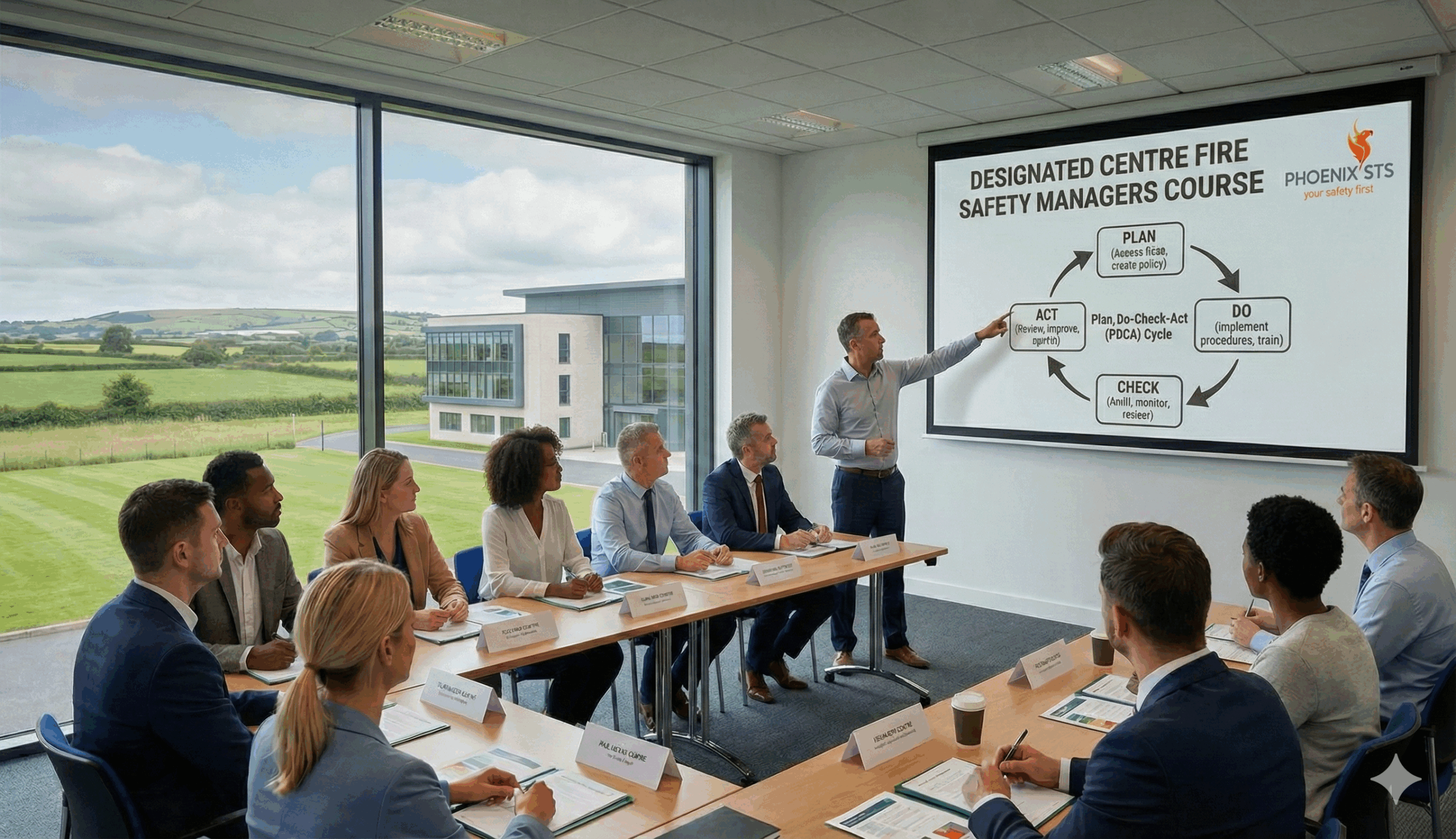
Designated Centre Fire Safety Managers Course delivered by Phoenix STS.
Upon completion, participants will be competent to oversee fire safety management systems, ensure regulatory compliance, and effectively coordinate emergency responses within their designated centres.
✓ HIQA Compliance
Meet Regulation 28 requirements and fire safety standards for designated centres.
✓ CPD Certified
Recognised professional development with certification valid for 5 years.
✓ Theoretical Foundation
Comprehensive coverage of fire safety management principles, legislation, and best practices.
✓ Expert Delivery
Taught by qualified fire safety engineers and experienced healthcare fire safety professionals.
Why Fire Safety Management Matters in Healthcare
Fire safety management in nursing homes presents unique challenges due to vulnerable populations: elderly residents with reduced mobility, cognitive impairments, and individuals requiring constant care and supervision.
The Health Information and Quality Authority (HIQA) mandates strict fire safety standards through Regulation 28 (Fire Precautions), requiring adequate means of escape, comprehensive staff training, and documented fire safety policies. HIQA’s Fire Safety Handbook provides detailed guidance for developing effective fire safety programmes.
Understanding Evacuation Planning
In nursing home environments, poorly executed evacuations can have devastating consequences. This course emphasises best practices, including:
🏃 Progressive Horizontal Evacuation
Understanding the principles of moving residents to safe compartments on the same floor when immediate full evacuation is not feasible.
📋 Personal Emergency Evacuation Plans
Developing individualised PEEPs for residents with specific mobility, sensory, or cognitive needs.
🛏️ Evacuation Equipment Selection
Assessing, selecting, and specifying appropriate evacuation aids based on resident profiles and building characteristics.
🌙 Night-Time Preparedness
Strategies for managing evacuations with minimal staffing levels during night shifts.
One-Day Programme Structure
Designated Centre Fire Safety Managers Course
Legislative Framework & Fire Safety Systems
- Irish fire safety legislation overview: Fire Services Acts 1981 & 2003
- Safety, Health and Welfare at Work Act 2005
- HIQA Regulation 28 (Fire Precautions) and compliance requirements
- Roles and responsibilities: Registered Provider, Person in Charge, Fire Safety Manager
- Understanding fire risk assessments: interpreting PAS 79:2020-1 reports
- Fire detection and alarm systems: I.S. 3218:2024 requirements
- Passive fire protection: fire doors, compartmentation, and escape routes
Emergency Management & Fire Safety Manager Functions
- Developing fire safety management plans and emergency procedures
- Emergency evacuation strategies: progressive horizontal evacuation
- Planning and conducting effective fire drills: frequency, scenarios, evaluation
- Creating Personal Emergency Evacuation Plans (PEEPs) for vulnerable residents
- Evacuation equipment options: selection criteria and procurement considerations
- The role and functions of a Fire Safety Manager in designated centres
- Coordinating fire safety training programmes and record-keeping
- Continuous improvement: the Plan-Do-Check-Act cycle
- Case Studies: Fire incidents in nursing homes, lessons learned
Key Learning Objectives
Upon successful completion of this 1-day course, participants will be able to:
📊 Understand Fire Risk Assessments
Interpret PAS 79:2020-1 fire risk assessments completed by fire engineers, identify key hazards, and develop action plans based on professional recommendations.
⚙️ Implement Fire Safety Management Systems
Collaborate with qualified fire safety consultants to develop, review, and implement technical fire safety management plans. Monitor system performance and maintain compliance documentation.
⚖️ Ensure Regulatory Compliance
Manage compliance with HIQA Regulation 28, Fire Services Acts, and relevant standards. Maintain comprehensive Fire Safety Registers with records of drills, equipment, and training.
👥 Coordinate Staff Training & Drills
Organise and oversee regular fire safety training and drills for all staff. Understand when and how to engage competent external trainers for formal HIQA-compliant training.
🛏️ Plan for Vulnerable Populations
Implement provisions for residents requiring evacuation assistance. Create effective PEEPs and select appropriate evacuation aids based on resident profiles and facility characteristics.
🚨 Lead Emergency Response
Confidently manage fire incidents by activating emergency procedures, coordinating evacuations, communicating with emergency services, and assisting the fire brigade upon arrival.
⚕️ Clinical Leadership During Fire Emergencies
In nursing home environments, a traditional Fire Warden role does not typically exist because, during any emergency, the senior clinical person on duty must take charge to ensure the safety and well-being of vulnerable residents.
While Fire Safety Managers play a crucial role in fire prevention and preparedness, overseeing risk assessments, training coordination, and maintenance of fire safety systems, decision-making authority during an actual incident rests with clinical leadership. This structure ensures that all emergency actions are guided by individuals best positioned to balance fire response measures with the immediate healthcare needs of those under their care.
This course prepares Fire Safety Managers to support clinical leaders effectively during emergencies by ensuring robust systems, training coordination, and procedures are in place.
Who Should Attend
This 1-day intensive programme is designed for professionals with responsibility for fire safety management in designated centres (nursing homes):
🔥 Fire Safety Managers & Coordinators
Anyone in a dedicated fire safety management role within nursing homes.
👔 Nursing Home Managers
Line managers, unit supervisors, clinical nurse managers, and Persons in Charge (PIC).
🛡️ Health & Safety Officers
Professionals managing safety compliance and risk management in nursing home environments.
🔧 Facilities & Maintenance Managers
Staff overseeing building maintenance, fire alarm systems, emergency lighting, and contractor liaison.
📋 Quality & Risk Management Personnel
Those involved in HIQA inspection preparation, accreditation, and integrated risk assessment.
📈 Prospective Fire Safety Managers
Individuals aspiring to fire safety management roles (no prior fire safety qualifications required).
Pre-Course Requirements
Before Attending
- No prior fire safety qualifications required: Suitable for those new to fire safety management roles
- English language proficiency: Course is delivered in English; learners must have a good command of English
- Specific requirements: Please let us know if learners have any specific learner requirements
The Plan-Do-Check-Act Cycle
Continuous improvement is fundamental to effective fire safety management. This course teaches the Plan-Do-Check-Act methodology:
🔄 PDCA Cycle for Fire Safety Management
PLAN
Conduct strategic reviews, gap analysis, set objectives, and assign responsibilities.
DO
Implement improvements: provide training, conduct risk assessments, update procedures.
CHECK
Measure compliance through inspections, audits, fire drill reviews, and incident analysis.
ACT
Refine plans, address deficiencies, and adapt to legislative changes.
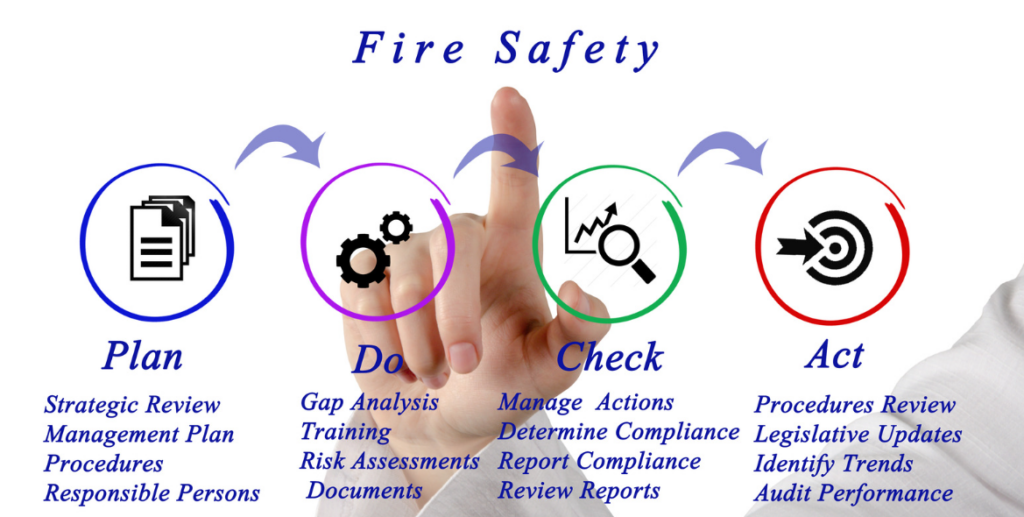
The Plan-Do-Check-Act framework ensures continuous improvement in fire safety management.
Benefits of This Course
⚖️ Regulatory Compliance & Legal Protection
Gain comprehensive understanding of fire safety legislation and HIQA regulations. Learn to interpret statutory duties, maintain compliant documentation, and demonstrate due diligence.
🛡️ Enhanced Safety for Vulnerable Populations
Improve fire risk assessment and emergency planning skills to create safer environments for residents who cannot evacuate independently.
💼 Management Competence & Confidence
Develop comprehensive understanding of fire safety management functions through interactive learning and case study analysis.
🔄 Continuous Improvement Culture
Adopt the Plan-Do-Check-Act methodology for ongoing fire safety management, resulting in sustained safety improvements rather than one-time fixes.
Training Methods
This course employs diverse instructional methods to accommodate different learning styles:
Presentations & Lectures
- Structured presentations with visual aids
- Diagrams of fire systems
- Evacuation plan flowcharts
- Legislative documentation review
Group Discussions & Q&A
- Facilitated discussions
- Share workplace experiences
- Interactive Q&A sessions
- Strict confidentiality maintained
Case Studies
- Real-world fire incident analysis
- Enforcement action reviews
- Lessons learned discussions
- Application to your facility
Theoretical Workshops
- Document analysis exercises
- Compliance reviews
- Scenario-based problem-solving
- Sample Fire Safety Register review
Certification & CPD Requirements
Your Certification
Upon successful completion, participants receive a CPD-certified Designated Centre Fire Safety Managers Certificate.
Certificate Validity
5 years from date of completion
Renewal Requirement
1-day refresher course after 5 years
Annual CPD
Minimum 30 hours CPD annually to maintain competence
Our Instructors
Phoenix STS is an established provider of specialised fire safety training for nursing home environments. Our instructors are experienced fire safety professionals, including qualified fire engineers and former fire officers with extensive knowledge of the designated centre sector. They are members of professional bodies including:
Frequently Asked Questions
Related Courses and Services
Page last updated: February 2026